Truck driver responsibilities go far beyond getting from one stop to the next. Professional drivers play a major role in safety, timing, compliance, and customer service every day. At Masters Trucking Academy, we teach students that success in trucking starts with understanding the full scope of the job. A license may open the door, but long-term success depends on how seriously a driver approaches each task. Knowing what the role involves helps students prepare for real work, not only test day.
Safe Operation Comes First
The most important part of the job is operating the vehicle safely. Drivers must stay alert, manage speed, watch traffic conditions, and make smart decisions in changing environments. Safety affects the driver, the cargo, and everyone else on the road. This is why strong habits matter so much from the beginning. Many truck driver duties connect directly to risk reduction, including proper following distance, mirror checks, lane control, and responding calmly under pressure during long hours behind the wheel.
Inspections and Equipment Awareness Matter
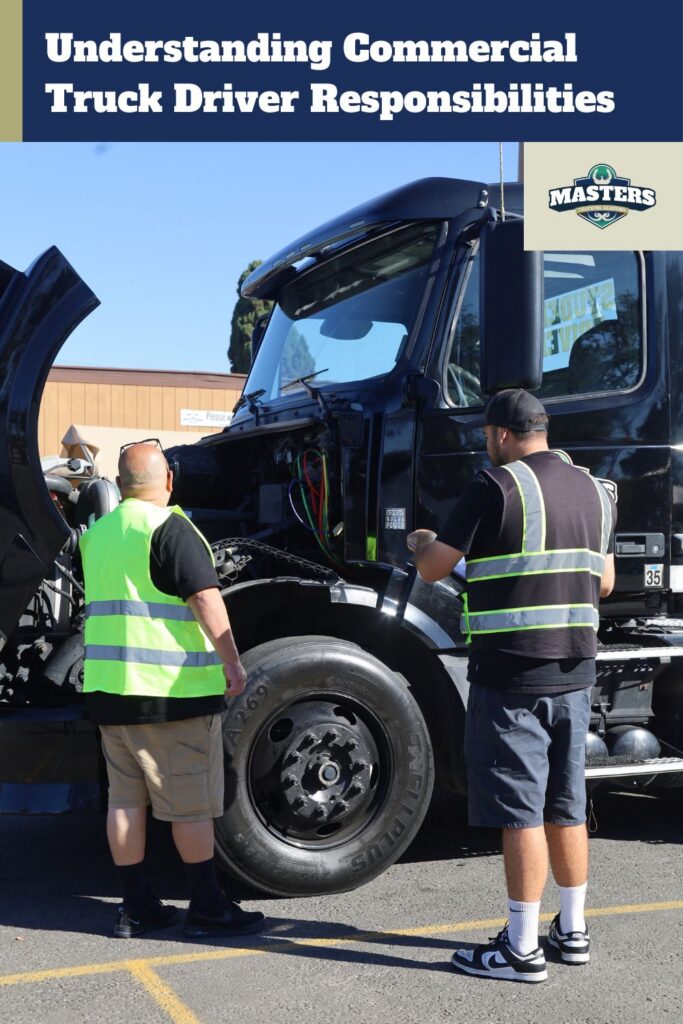
Drivers are responsible for checking their equipment before, during, and after a trip. That includes looking at tires, brakes, lights, fluids, and trailer connections. These steps help prevent breakdowns, reduce delays, and protect public safety. A driver who ignores inspections can create larger problems for the company and for others on the road. At Masters, students learn that equipment awareness is not optional. It is one of the daily habits that separates dependable professionals from drivers who create avoidable risks.
Communication Is Part of the Job

Strong communication helps drivers stay efficient and professional. Drivers often speak with dispatchers, warehouse teams, customers, and safety personnel throughout the day. They need to ask clear questions, confirm details, and report issues quickly. Good communication also supports smoother deliveries and better teamwork. When employers think about truck driver duties and responsibilities, they are not only thinking about driving. They also want drivers who can represent the company well and handle interactions in a respectful, reliable, and organized way.
Compliance and Documentation Count
A commercial driver must follow rules that protect both safety and accountability. That includes keeping up with logs, inspections, schedules, and any required paperwork. Drivers also need to understand weight limits, route restrictions, and company procedures. These expectations are part of modern trucking, and employers take them seriously. Many truck driver requirements involve more than physical driving skill. They also include discipline, consistency, and the ability to follow regulations without cutting corners when the workday becomes demanding.
Professionalism Supports Long-Term Success
The best drivers treat trucking like a career, not a temporary task. They arrive prepared, respect deadlines, care for equipment, and stay focused even when the day gets difficult. Professionalism helps drivers build trust with employers and creates more opportunities over time. It also supports retention, since confident and well-prepared drivers are more likely to succeed and stay in the field. At Masters Trucking Academy, we train students to understand the full responsibility of the role from the very start.
When students understand the full scope of the job, they are better prepared to succeed in training and in the workforce. Safety, inspections, communication, compliance, and professionalism all shape what employers expect from a reliable commercial driver. At Masters Trucking Academy, we help students build these habits through real instruction and practical coaching. Enroll in Masters’ truck driver training program today and prepare for a career built on strong judgment, consistency, and clear truck driver responsibilities.
 How Regional Trucking Jobs are Changing the Industry